Official planning resources, not a navigation-safety chart. Confirm launch access, weather, tides and closures before departure; historical maps may show outdated facilities.
Great Calusa Blueway: Pine Island Sound & Matlacha Pass
Pine Island Sound, Matlacha Pass, launch points and suggested paddling routes
For trip planning only; expressly NOT FOR NAVIGATIONAL USE. Check current launch access, closures, tides, weather and local conditions before paddling. Listed facilities/fees may be outdated.
Bridges & locks: Northbound through the main pass: Matlacha/SR 78 drawbridge. It is not required for every trip from this ramp. Check current opening status and your vessel's clearance before heading north. Lock-free route not verified.
Hours & parking
5 am–9 pm daily
Parking: $10 daily; 30 vehicle-and-trailer spaces; no overnight parking
Bridges & locks: A local boating guide reports one bridge on the canal route to Matlacha Pass. Clearance not verified—check before launching. Lock-route verification not established.
Parking: $15 daily boat-trailer parking, or valid annual permit; pay before launching; Passport Parking zone 1961; use tow-vehicle plate, not trailer plate
Launch access: Marked channel along Demere Key causeway
RESTRICTED: recreational use Saturdays, Sundays and Lee County-recognized holidays only; commercial-only on ordinary weekdays
Bridges & locks: Use the marked no-wake channel along the Demere Key causeway to Pine Island Sound. Bridge and lock route not independently verified—check a current nautical chart before launching.
Hours & parking
6:30 am–8:30 pm on recreational-use days
Parking: $10 daily; vehicle-and-trailer parking; county annual parking pass honored weekends/county holidays only
Bridges & locks: Canal/Jug Creek access toward Charlotte Harbor. Bridge and lock route not independently verified—check a current nautical chart before launching.
Hours & parking
5 am–9 pm daily
Parking: $10 daily; 29 designated vehicle-and-trailer spaces; no overnight parking; county annual parking pass accepted
Rules can change, including emergency closures. Before every trip check the official species page, exact location, date, license status and state/federal rules. This short guide is not a complete regulation book.
Educational guide for recreational hook-and-line fishing around Matlacha and nearby Southwest Florida habitats. Species are regional possibilities, not verified resort sightings or guaranteed catches.
Matlacha is within the Charlotte Harbor management region for the local snook/redfish guidance here. The region runs from near Venice Municipal Airport to near Vanderbilt Beach Road in Collier County; “Southwest Florida” is not the same as FWC’s named Southwest region.
Licenses, water boundaries & measurements
Florida Gulf state waters extend 9 nautical miles offshore; federal waters beyond have separate rules. Some state species rules expressly extend into adjacent federal waters. Never assume the state bag limit authorizes federal harvest.
A saltwater license is generally required even for catch-and-release unless an exemption applies. The free shoreline-only license is for Florida residents, not visiting nonresidents, and does not cover fishing from a vessel or shore reached by vessel. Check snook permits and applicable special designations separately; do not assume resort access includes a fishing license.
For Gulf reef-fish fishing aboard a vessel, carry/use the applicable dehooking and barotrauma-release gear. Gulf state waters require non-stainless, non-offset circle hooks with natural bait, a dehooker, and a descending device or venting tool rigged and ready. Federal details differ; consult the linked rules. Mangrove snapper is a reef fish even when caught inshore.
Legal harvest season and best fishing conditions are different. A year-round listing is not an assurance against an emergency closure. Tides, weather, water temperature and habitat affect fishing; no single season applies to all Southwest Florida fish.
Identification cues are a learning aid, not enough alone to identify a fish for harvest. Open each official illustrated FWC profile and verify the species. Representative reference photos appear below; age, lighting and condition can change appearance. Photos are not sufficient alone for harvest identification.
39 fish + 2 shellfish entries. A curated Southwest Florida reference—not every species, a catch-frequency ranking or permission to keep a catch. Offshore and reef species are identified separately from inshore habitat. Larger game fish appear first, followed by smaller fish and clearly marked special-rule groups.
Looking for “squirrelfish”? Sand perch is locally called squirrelfish. The red reef squirrelfish is a different fish; the nickname does not identify a past catch.
39 fish + 2 shellfish entries
Florida records, world-record lookup & making a claim
Florida state records cover qualifying catches in Florida state waters and adjacent federal waters. Do not label these federal records. IGFA world records are separate, not federal-government records.
Record weights are historical achievements, not legal minimums or permission to keep a fish. Weight and length records can belong to different fish. A listed record is not necessarily the largest fish ever caught or the biological maximum.
FWC’s weight table does not publish the weight-winning fish’s length. Where shown, adult length records are separate catches and categories. “Vacant” is different from a species not being listed.
First obey current fishing and handling rules. Do not retain or transport a prohibited, oversized, undersized or closed-season fish for weighing. A suspected record is not an exemption.
For an eligible weight claim, use a land-based certified scale certified within the prior 12 months; record a weighing witness, scale certification number and any deducted sling weight. Estimated weights and on-water weighing do not qualify.
Document the scale reading and certification, gear, angler with fish, and clear identification views. Complete the FWC application with witness information and a notarized angler signature. Species may require qualified biologist confirmation.
Length categories are separate and limited to eligible species. Follow the FWC measuring-device and photo/video rules, current handling law, and prompt safe release where required. Check the official rules before attempting a claim; FWC decides acceptance.
No numerical world records are shown because the official IGFA listing could not be independently read and verified. A state record is not a federal-government record.
Records and rules checked October 28, 2026. Recheck official sources before every trip or claim.
Game fish & regulated catches
Game fish & regulated catches
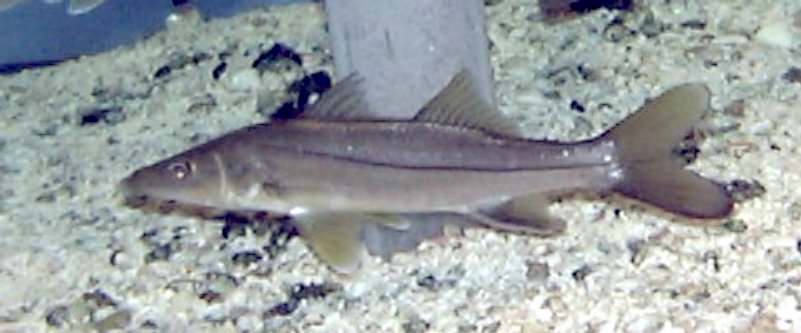
Common snook
Common snook in an aquarium. Eileen McVey / NOAA · Source · Public domain. No content changes; displayed at reduced size.
Season & legal size: Charlotte Harbor: harvest open March 1–April 30 and October 1–November 30; closed December–February and May–September. Slot: 28–33 in TL; 1 per person/day.
How to measure: Total length (TL): lay the fish on its side, close its mouth and pinch the tail together. Measure straight from the frontmost point of the head to the longest tail tip—not along the body’s curve.
Mangrove edges, seagrass, beaches and structure.
Identification cues: Dark lateral stripe reaches tail; big mouth and projecting lower jaw.
Charlotte Harbor: 28–33 in TL; 1/person/day. Harvest open March–April and October–November; closed December–February and May–September. Hook-and-line only. Keep whole until ashore; no captain/crew bag on for-hire trips.
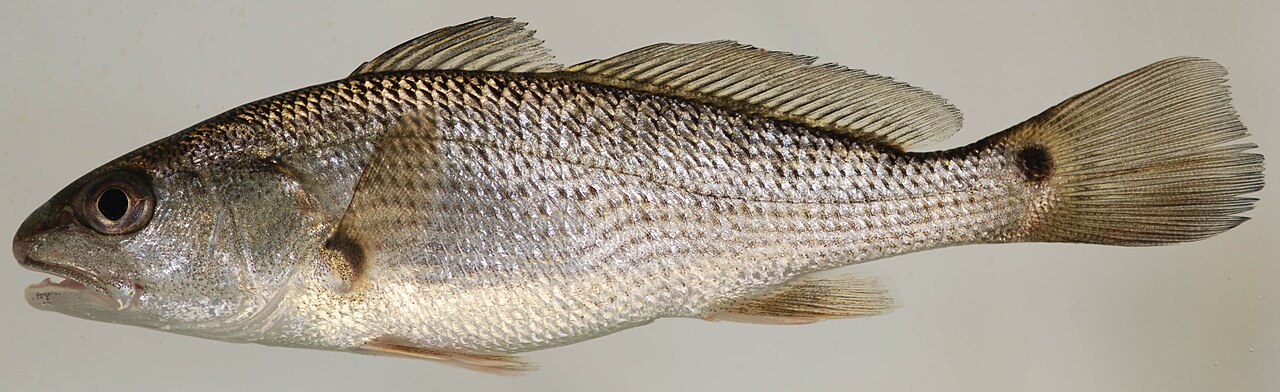
Small red drum specimen; note the dark tail-base spot. Robert Aguilar / Smithsonian Environmental Research Center · Source · CC BY 2.0. No content changes; displayed at reduced size.
Season & legal size: Charlotte Harbor state waters: open year-round. Slot: 18–27 in TL; 1 per person/day, maximum 2 per vessel.
How to measure: Total length (TL): lay the fish on its side, close its mouth and pinch the tail together. Measure straight from the frontmost point of the head to the longest tail tip—not along the body’s curve.
Seagrass, oyster edges, sand and muddy estuary bottoms.
Identification cues: Copper body; usually a dark tail-base spot; no chin barbels.
Charlotte Harbor state waters: 18–27 in TL; 1/person/day and 2/vessel; listed year-round. No multiple hook with natural bait, spearing or snatching. Keep whole until ashore; no captain/crew bag on for-hire trips. Do not apply this state-water allowance offshore.
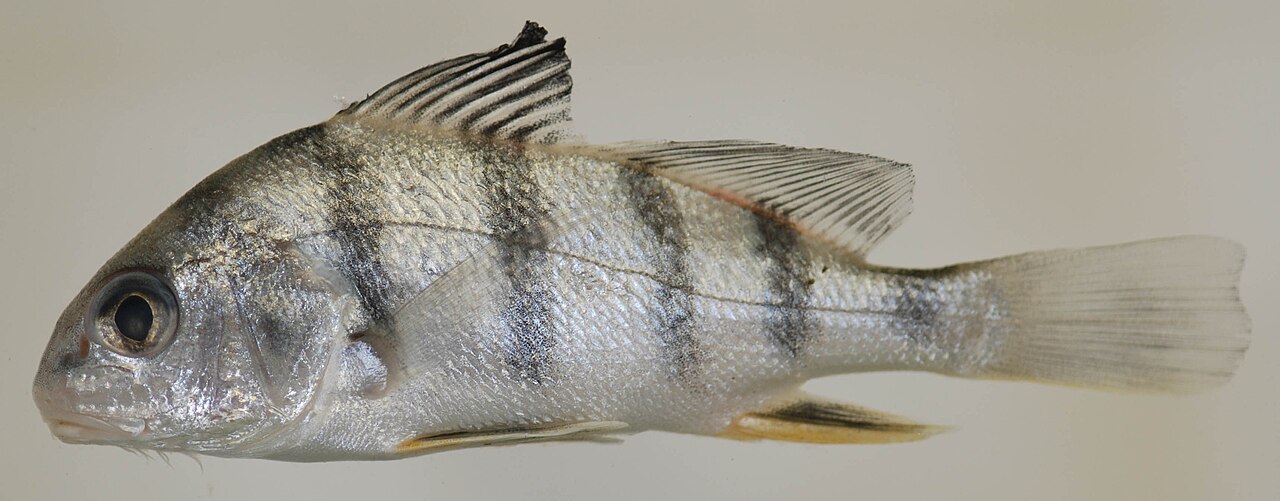
Juvenile black drum; young fish have prominent vertical bars. Robert Aguilar / Smithsonian Environmental Research Center · Source · CC BY 2.0. No content changes; displayed at reduced size.
Season & legal size: Florida state waters: open year-round. Slot: 14–24 in TL; 5 per person/day, including at most one over 24 in.
How to measure: Total length (TL): lay the fish on its side, close its mouth and pinch the tail together. Measure straight from the frontmost point of the head to the longest tail tip—not along the body’s curve.
Bay bottoms, oyster beds and bridge or dock structure.
Identification cues: Chin barbels; high arched back; juveniles have dark vertical bars.
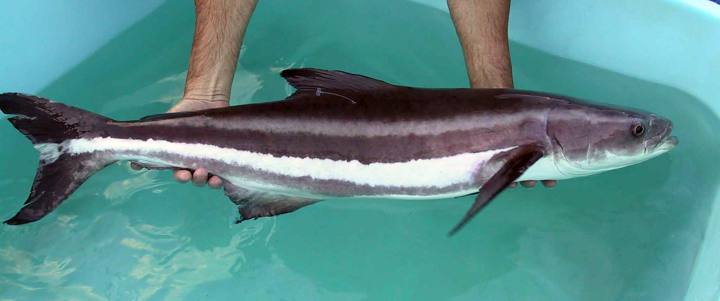
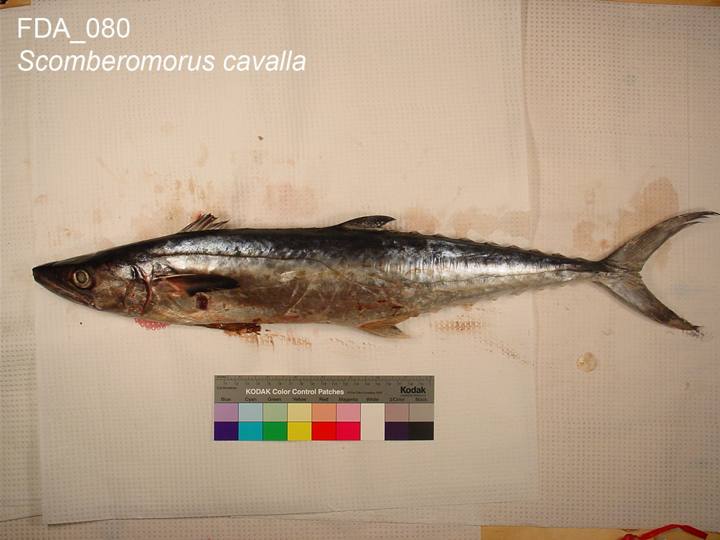
Source photograph reaches the tail edge; use the identification cues and official source as well. Jorge Alarcon or Dr. Daniel Benetti / NOAA · Photo source ↗ · Public domain (NOAA) ↗. Resized only; complete image retained.
Season & legal size: Minimum 36 in FL; 1/person/day or 2/vessel/day, whichever is less. FWC recreational species page does not specify a season.
How to measure: With mouth closed, measure straight from jaw/snout tip to center of tail fork; do not follow body curve.
Identification cues: Long brown body, broad flattened head, protruding lower jaw and dark stripe through eye; isolated short dorsal spines.
Inlets, bays, buoys, pilings and wrecks. FWC explicitly lists cobia among Charlotte/Lee inshore/coastal catches.
Season & legal size: Gulf state waters: open year-round; minimum 24 in FL; 3/person/day.
How to measure: With mouth closed, measure straight from jaw/snout tip to center of tail fork; do not follow body curve.
Identification cues: Streamlined silver fish; lateral line drops sharply below second dorsal fin; first dorsal lacks the dark front blotch of Spanish mackerel. Juveniles can have spots.
Coastal/offshore, sometimes piers. FWC lists king mackerel for Charlotte/Lee offshore fishing.
Season & legal size: Outside Special Permit Zone (Charlotte Harbor): open year-round; 11–22 in FL, with one over 22 in allowed within 2/person/day; maximum 2 over 22 in/vessel.
How to measure: With mouth closed, measure straight from jaw/snout tip to center of tail fork; do not follow body curve.
Identification cues: Deep, flattened silver body; steep forehead; long swept dorsal and anal fins beginning opposite each other. Deeper-bodied than pompano.
Gulf-range species; flats, sandy channels and offshore structure. Local frequency not established by these sources.
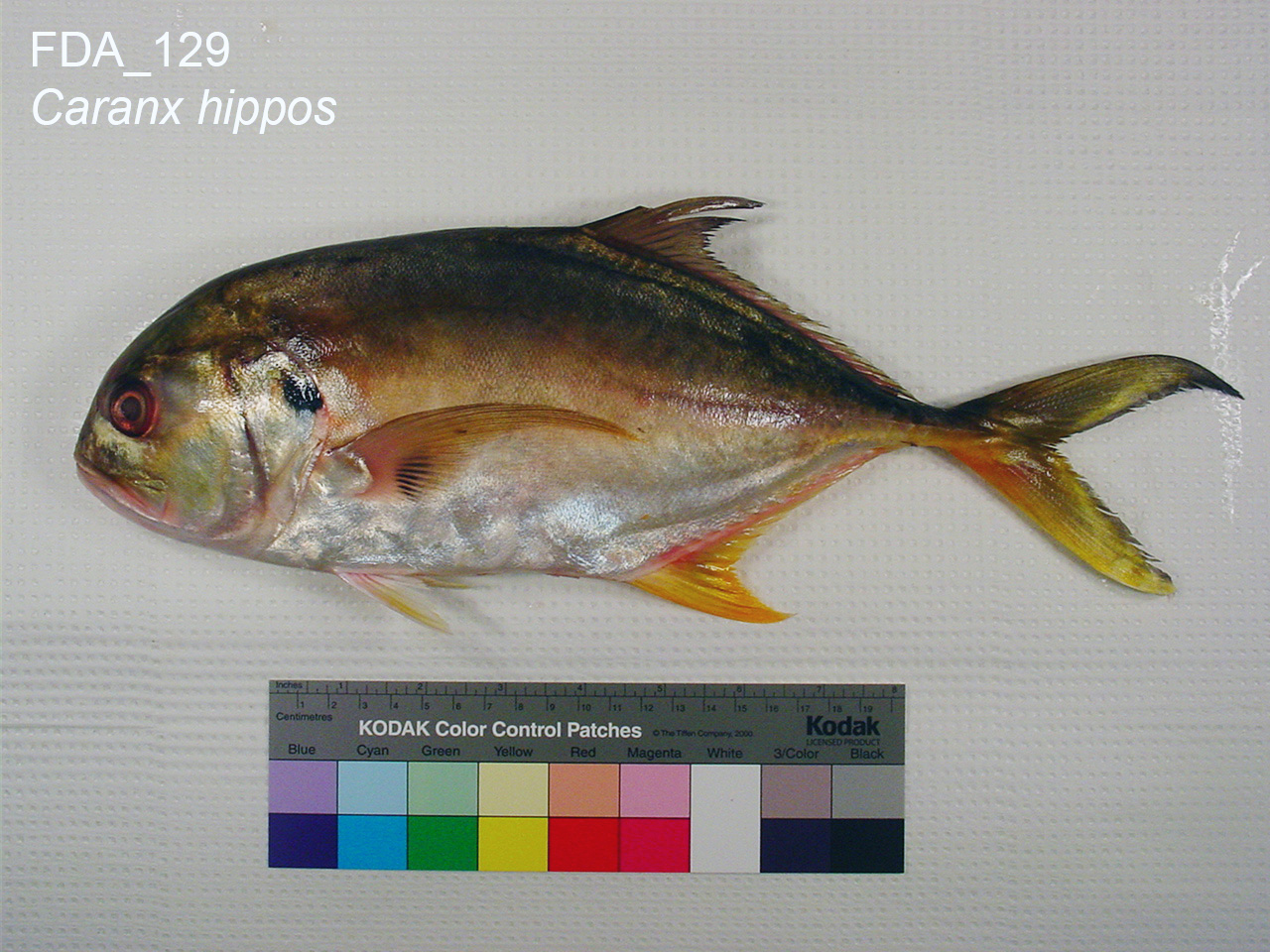
Crevalle jack reference specimen; note the dark gill-cover spot. J. Deeds / U.S. Food and Drug Administration · Source · Public domain. No content changes; displayed at reduced size.
Season & legal size: No species-specific closed season or size slot listed by FWC. Default bag: 2 fish or 100 lb per person/day, whichever is greater; general restrictions still apply.
How to measure: No legal length measurement is specified for this species because FWC lists no size limit; do not treat any length as a special harvest allowance.
Inshore and open-water baitfish schools.
Identification cues: Steep forehead; deep body; dark spots on gill cover and pectoral-fin base.
FWC lists jack crevalle as “unregulated,” not unlimited: default 2 fish or 100 lb/person/day, whichever is greater. General gear and location restrictions still apply.
Tripletail reference specimen; rounded rear fins form its distinctive outline. J. Deeds / U.S. Food and Drug Administration · Source · Public domain. No content changes; displayed at reduced size.
Season & legal size: Open year-round. Minimum: 18 in TL; 2 per person/day.
How to measure: Total length (TL): lay the fish on its side, close its mouth and pinch the tail together. Measure straight from the frontmost point of the head to the longest tail tip—not along the body’s curve.
Bays to offshore, often near floating objects and markers.
Identification cues: Rounded dorsal and anal fins create a three-tail outline; mottled brown body.
18 in TL minimum; 2/person/day; listed year-round; state rules extend into federal waters. Hook-and-line only; no multiple hook with natural bait or snatching.
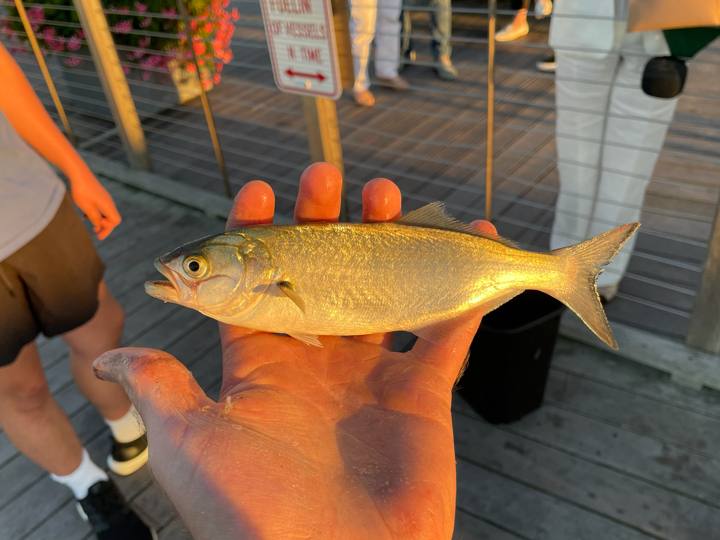
Young bluefish reference photographed in hand; not an adult-size example. Luke Padon · Photo source ↗ · CC BY 4.0 ↗. Resized only; complete image retained.
Season & legal size: Gulf state and federal waters: minimum 12 in FL; 10/person/day. FWC recreational species page does not specify a season.
How to measure: With mouth closed, measure straight from jaw/snout tip to center of tail fork; do not follow body curve.
Identification cues: Blue-green back, silver sides, large toothed mouth and dark patch at pectoral-fin base; lateral line nearly straight.
Gulf coast species; young use inshore water, adults move offshore. FWC says most Gulf catches weigh under 3 lb; not a claim of local catch rank.
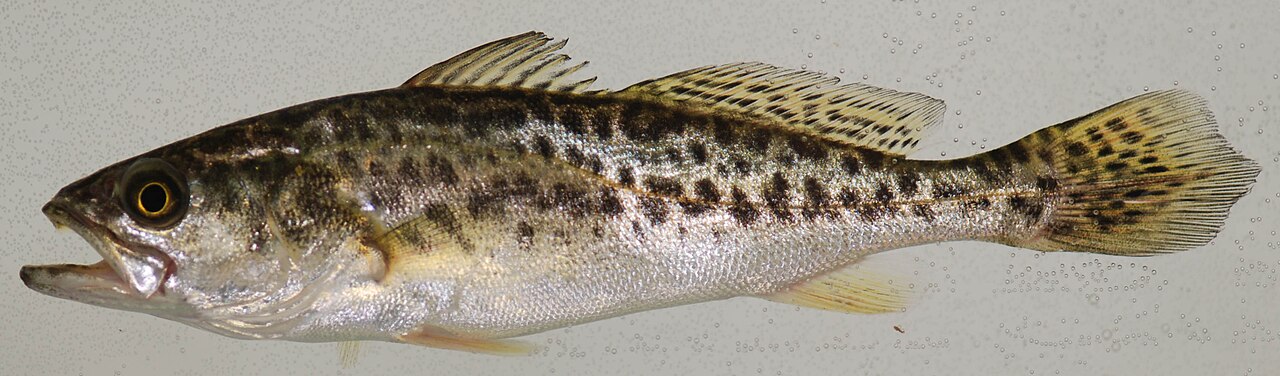
Small spotted seatrout specimen, showing spots on body and tail. Robert Aguilar / Smithsonian Environmental Research Center · Source · CC BY 2.0. No content changes; displayed at reduced size.
Season & legal size: Charlotte Harbor: open year-round. Slot: 15–19 in TL; 3 per person/day. Within that bag, one over 19 in per vessel—or per person when fishing from shore.
How to measure: Total length (TL): lay the fish on its side, close its mouth and pinch the tail together. Measure straight from the frontmost point of the head to the longest tail tip—not along the body’s curve.
Grass beds and sandy coastal bottoms.
Identification cues: Black spots extend onto fins and tail; two prominent upper-jaw canine teeth.
Charlotte Harbor: 15–19 in TL; 3/person/day; listed year-round. Within that bag, one fish over 19 in per vessel, or per person from shore. No multiple hook with natural bait or snatching; keep whole until ashore; no for-hire captain/crew bag.
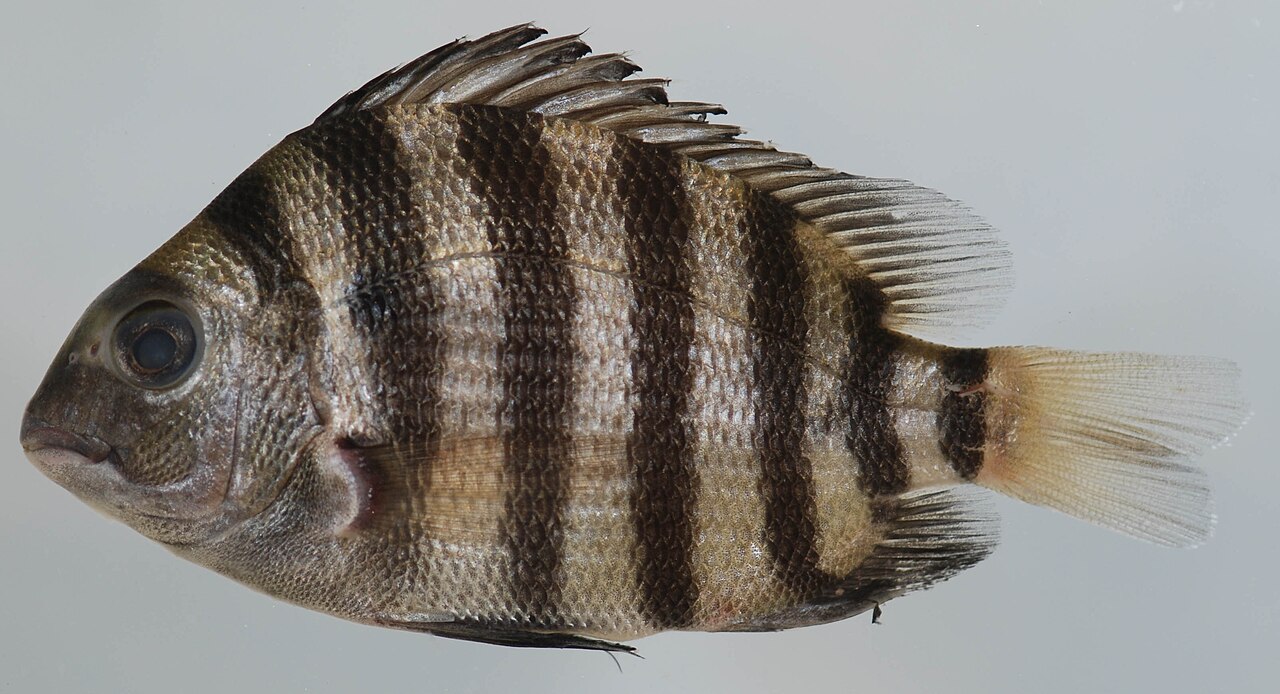
Small sheepshead specimen, showing bold vertical bars. Robert Aguilar / Smithsonian Environmental Research Center · Source · CC BY 2.0. No content changes; displayed at reduced size.
Season & legal size: Open year-round. Minimum: 12 in TL; 8 per person/day. During March–April, maximum 50 per vessel/trip.
How to measure: Total length (TL): lay the fish on its side, close its mouth and pinch the tail together. Measure straight from the frontmost point of the head to the longest tail tip—not along the body’s curve.
Oyster bars, seawalls, pilings and tidal creeks.
Identification cues: Bold vertical bars; incisor-like teeth; no chin barbels.
12 in TL minimum; 8/person/day; 50/vessel/trip during March–April; listed year-round. State limits extend into federal waters. No multiple hook with natural bait or snatching.
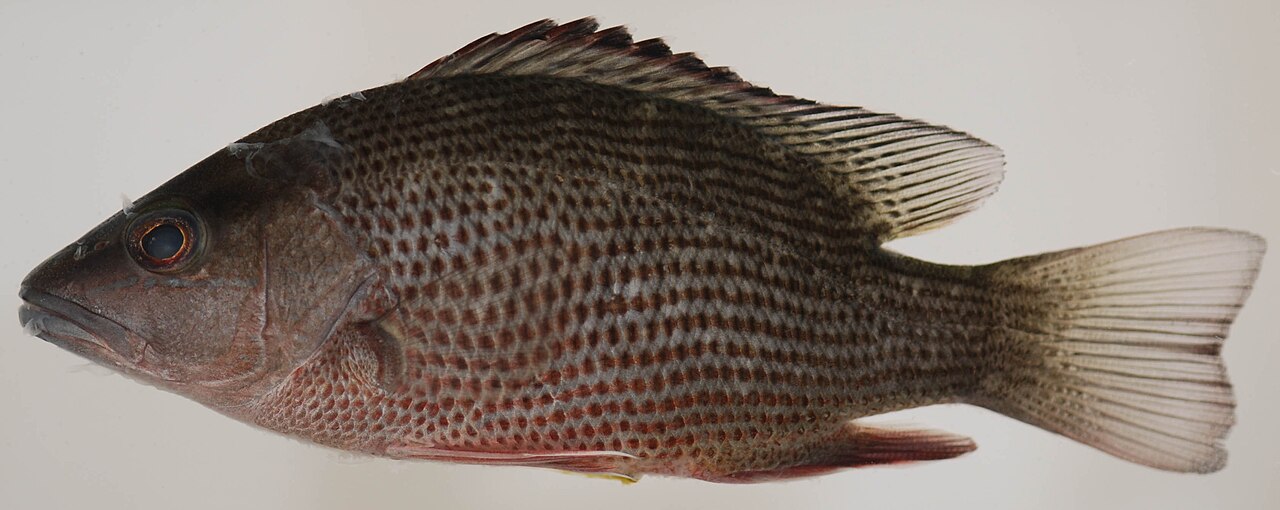
Small gray (mangrove) snapper specimen. Robert Aguilar / Smithsonian Environmental Research Center · Source · CC BY 2.0. No content changes; displayed at reduced size.
Season & legal size: Gulf state waters: open year-round. Minimum: 10 in TL; 5 per person/day within the 10-snapper aggregate.
How to measure: Total length (TL): lay the fish on its side, close its mouth and pinch the tail together. Measure straight from the frontmost point of the head to the longest tail tip—not along the body’s curve.
Mangroves, seagrass and reef or dock structure.
Identification cues: Gray-brown with reddish markings; juveniles show a dark eye stripe; upper canine teeth.
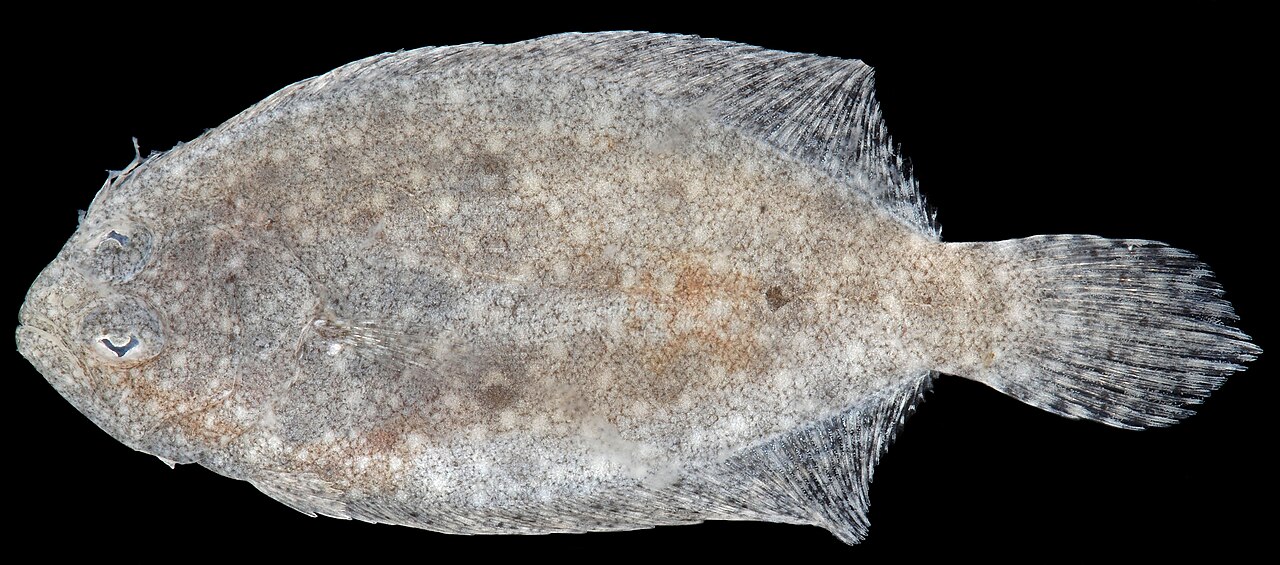
Juvenile Gulf flounder specimen, showing its flat body and three dark spots. Robert Aguilar / Smithsonian Environmental Research Center · Source · CC BY 2.0. No content changes; displayed at reduced size.
Season & legal size: Harvest closed October 15–November 30. Open December 1–October 14: minimum 14 in TL; 5 per person/day.
How to measure: Total length (TL): lay the fish on its side, close its mouth and pinch the tail together. Measure straight from the frontmost point of the head to the longest tail tip—not along the body’s curve.
Sandy or muddy bottom and tidal creeks.
Identification cues: Flat body, both eyes on left side; three prominent eye-like spots in a triangle.
14 in TL minimum; 5/person/day; harvest closed October 15–November 30. Rules extend into federal waters. No multiple hook with natural bait or snatching.
Outside the closure, slowly work a shrimp-tipped single-hook jig or soft lure just above the bottom. This is a technique suggestion, not permission to retain fish.
Fishing tip, not a legal rule or catch guarantee
Watch teeth; release undersized fish promptly. Southern flounder has non-eye-like blotches.
FWC lists a broader “Flounder” record of 20.56 lb; not verified as a gulf flounder-specific record.
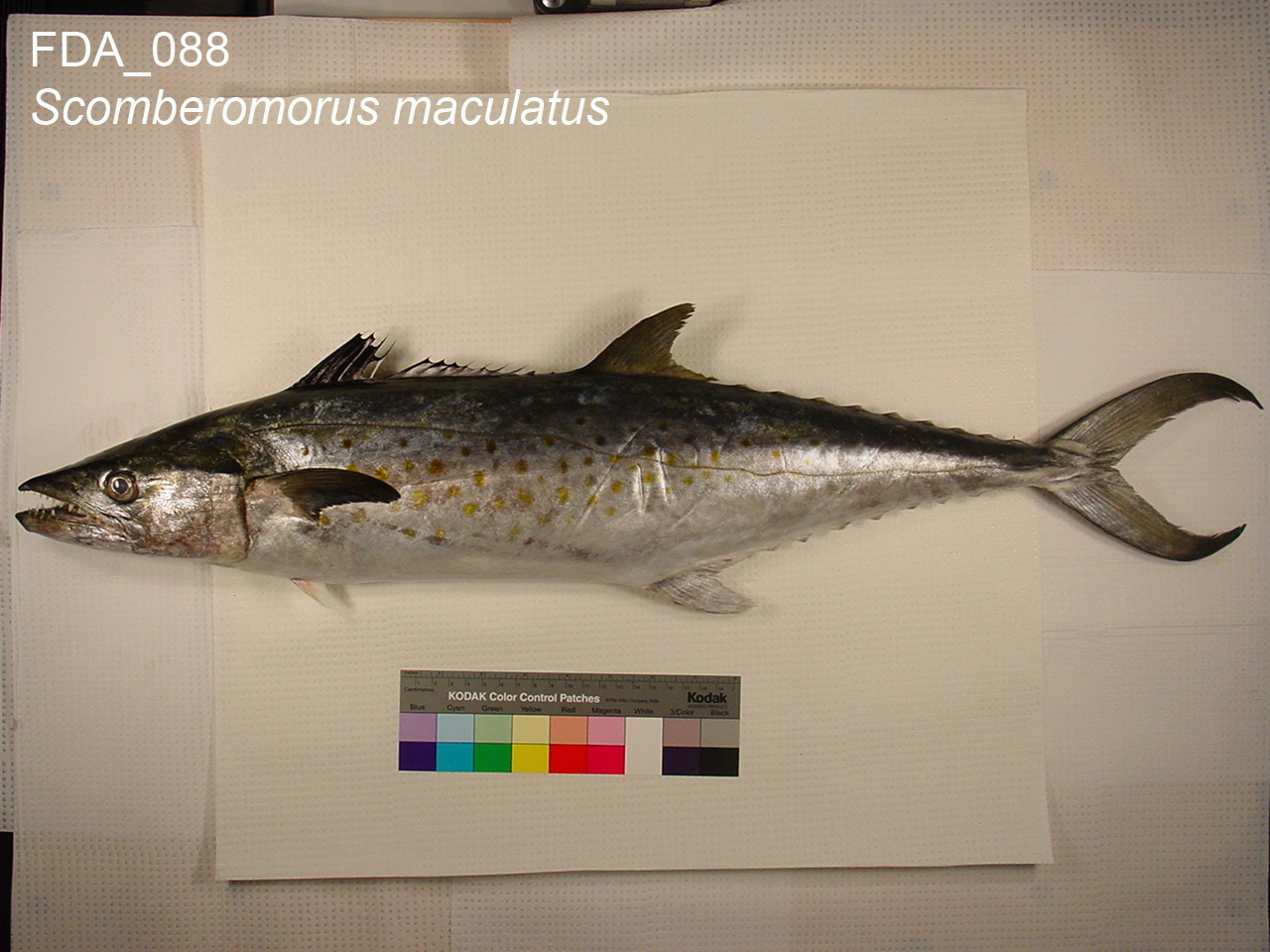
Spanish mackerel reference specimen. J. Deeds / U.S. Food and Drug Administration · Source · Public domain. No content changes; displayed at reduced size.
Season & legal size: Florida state waters: open year-round. Minimum: 12 in FL; 15 per person/day.
How to measure: Fork length (FL): with the mouth closed, measure straight from the jaw/snout tip to the center of the tail’s fork—not to the longest tail tip or along the body’s curve.
Nearshore bait schools, grass beds and reefs.
Identification cues: Gold side spots; black front dorsal patch; lateral line slopes gradually (unlike king mackerel).
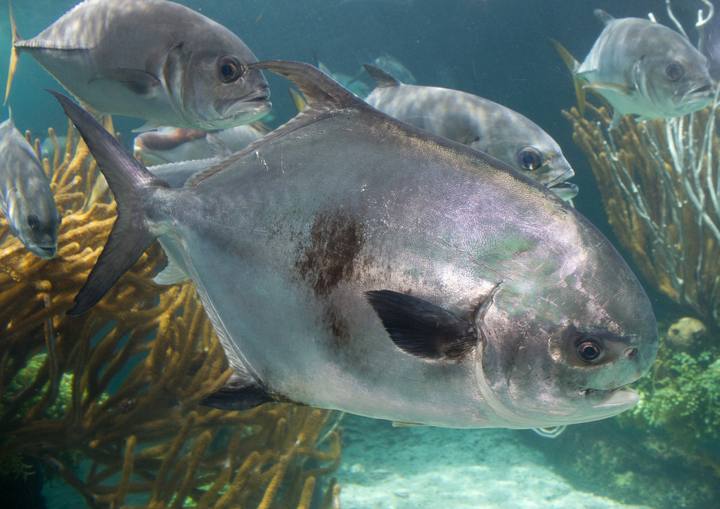
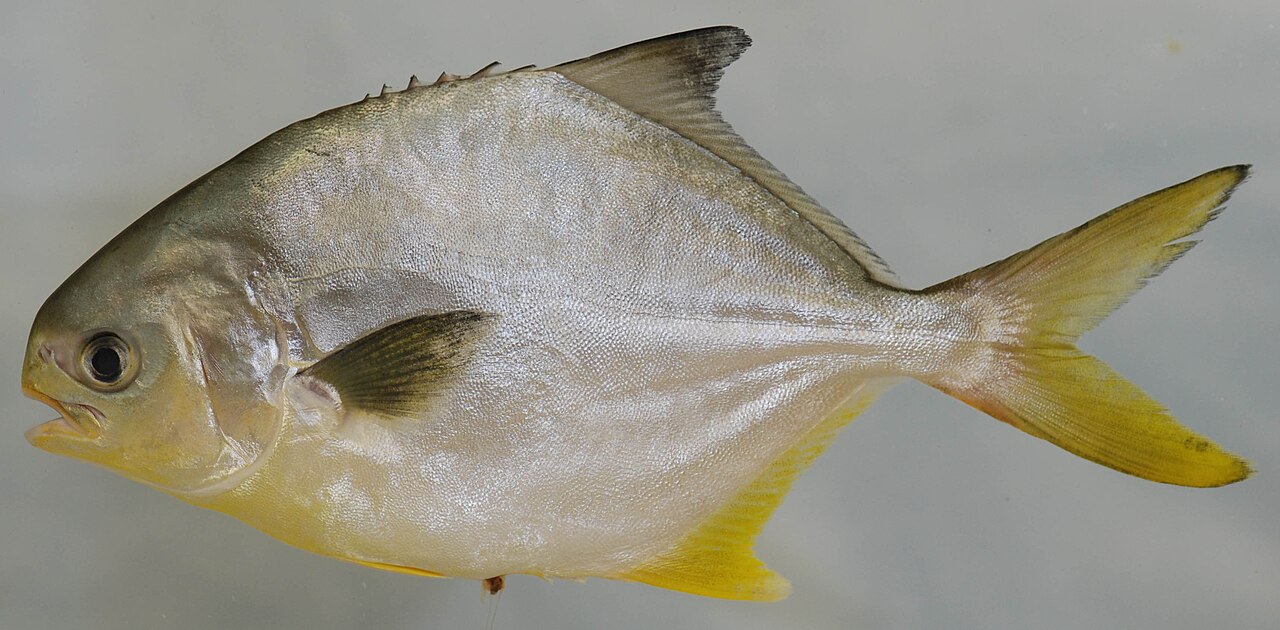
Florida pompano specimen, with a silver body and yellowish fins. Robert Aguilar / Smithsonian Environmental Research Center · Source · CC BY 2.0. No content changes; displayed at reduced size.
Season & legal size: Open year-round. Minimum: 11 in FL; 6 per person/day.
How to measure: Fork length (FL): with the mouth closed, measure straight from the jaw/snout tip to the center of the tail’s fork—not to the longest tail tip or along the body’s curve.
Sandy beaches, oyster edges and grass beds.
Identification cues: Deep silver body; small mouth; dorsal fin starts before anal fin; yellowish belly.
11 in FL minimum; 6/person/day; listed year-round in state and federal waters. No multiple hook with natural bait or snatching. Confirm ID: permit has different regulations.
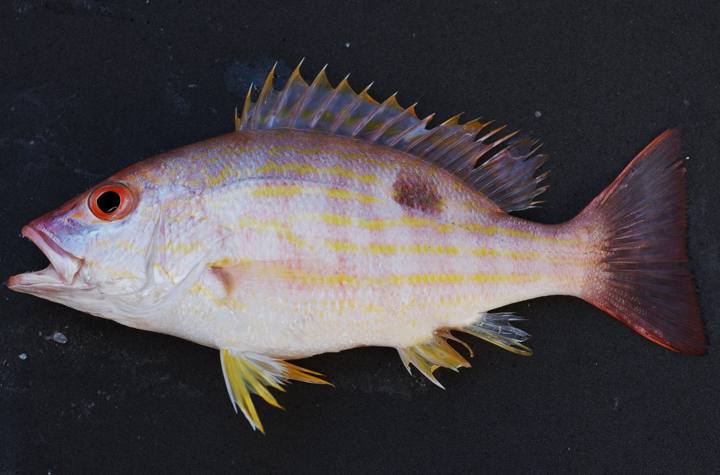
SEFSC Pascagoula Laboratory; Collection of Brandi Noble, NOAA/NMFS/SEFSC · Photo source ↗ · CC BY 2.0 ↗. Resized only; complete image retained.
Season & legal size: Gulf state waters: open year-round; minimum 10 in TL; 20/person/day, outside the 10-snapper aggregate.
How to measure: Lay fish on side; close mouth and compress tail. Measure straight from frontmost head point to longest tail tip, including tail filaments; do not follow body curve.
Identification cues: Pink/silver with yellow side stripes, eye-sized dark spot touching lateral line, rounded anal fin and dark-edged tail. Mutton snapper has a pointed anal fin.
South Florida coastal structure; juveniles in seagrass and shallow reefs. Suitable regional addition, not claimed common at every inshore spot.
SEFSC Pascagoula Laboratory; Collection of Brandi Noble, NOAA/NMFS/SEFSC · Photo source ↗ · CC BY 2.0 ↗. Resized only; complete image retained.
Season & legal size: Gulf state waters: open year-round; minimum 10 in TL; 10/person/day, outside the 10-snapper aggregate.
How to measure: Lay fish on side; close mouth and compress tail. Measure straight from frontmost head point to longest tail tip, including tail filaments; do not follow body curve.
Identification cues: Slender reddish upper body and pale belly with fine yellow-gold streaks; no large canine teeth, mouth appears upturned.
Gulf-range offshore fish over rock, gravel or sand; NOAA gives 60–400 ft habitat. Label offshore, not common shallow-harbor fish.
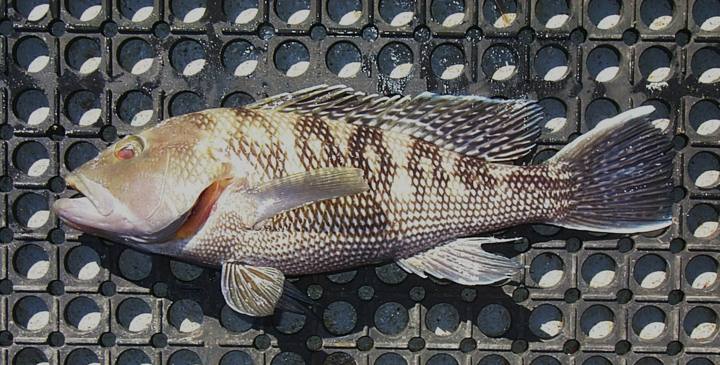
Season & legal size: Gulf state waters: minimum 10 in TL; 100 lb/person/day. FWC recreational species page does not specify a season.
How to measure: Lay fish on side; close mouth and compress tail. Measure straight from frontmost head point to longest tail tip, including tail filaments; do not follow body curve.
Identification cues: Stout dark fish with pale scale centers, continuous dorsal fin and large mouth; adults can have a long upper tail ray.
Eastern Gulf range; rocky bottoms, pilings and wrecks, with juveniles also in estuaries. Not a local abundance claim.
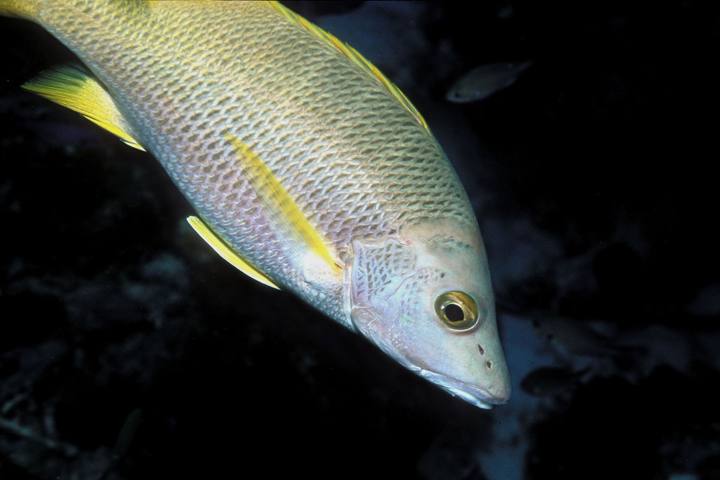
Source photo shows head and front body; tail is outside the original frame. LASZLO ILYES (laszlo-photo) · Photo source ↗ · CC BY 2.0 ↗. Resized only; complete image retained.
Season & legal size: Gulf state waters: open year-round; minimum 10 in TL; 10/person/day within the 10-snapper aggregate.
How to measure: Lay fish on side; close mouth and compress tail. Measure straight from frontmost head point to longest tail tip, including tail filaments; do not follow body curve.
Identification cues: Olive/brown with yellow fins, faint pale vertical bars and blue line below eye; pointed snout and enlarged upper canines.
Eastern Gulf range; juveniles use grassy flats, adults coastal reefs. A useful snapper lookalike, not labeled a common Charlotte Harbor catch.
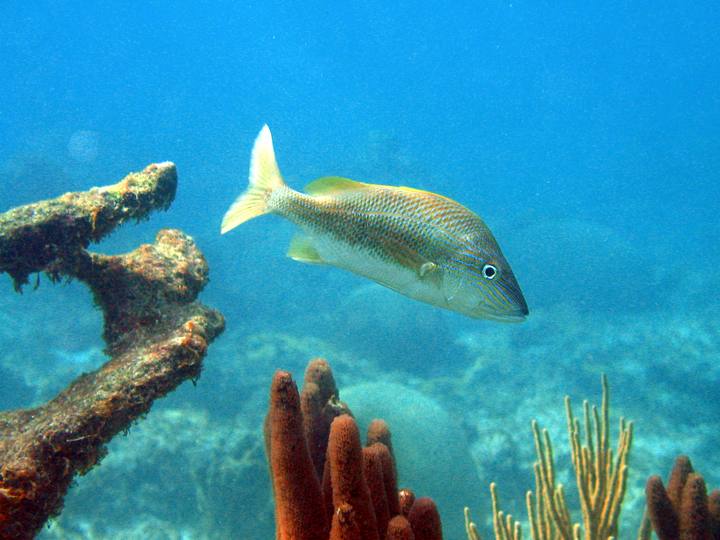
NOAA CCMA Biogeography Team / NOAA Photo Library · Photo source ↗ · CC BY 2.0 ↗. Resized only; complete image retained.
Season & legal size: No listed size/season limit; default cap: 2 fish or 100 lb/person/day, whichever is greater. General restrictions apply.
How to measure: N/A: no harvest length threshold in this summary.
Identification cues: Pale gray-bronze body; narrow blue head lines stop at gill cover; reddish mouth interior. Unlike bluestriped grunts, strong blue lines are concentrated on the head.
Coastal hard bottom and reefs; juveniles occur inshore. Florida Gulf/coastal habitat; inclusion is not a claim of equal abundance at Matlacha.
Season & legal size: No listed size/season limit; default cap: 2 fish or 100 lb/person/day, whichever is greater. General restrictions apply.
How to measure: N/A: no harvest length threshold in this summary.
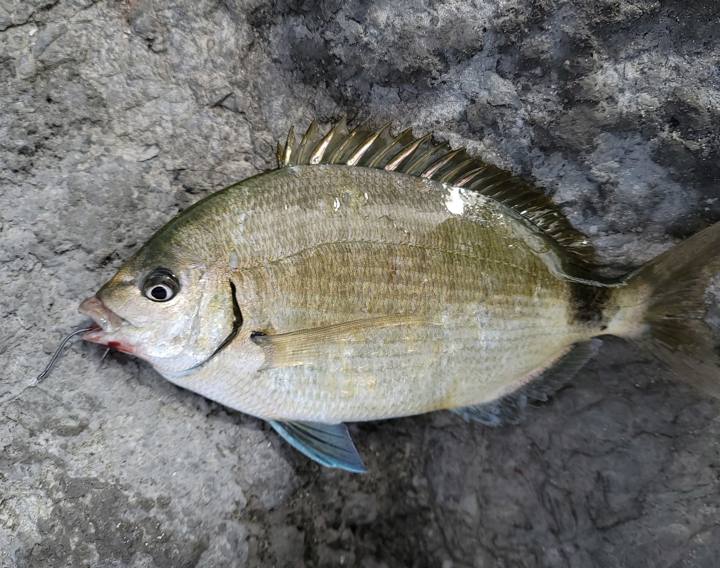
Identification cues: Gray-brown, sometimes blue-toned body with small orange-blue markings; tiny mouth ends below front nostril. Pinfish have incisor-like teeth and a different mouth position.
Coastal shallows; bays and estuaries over soft bottoms. Florida Gulf/coastal habitat; inclusion is not a claim of equal abundance at Matlacha.
Florida all-tackle record: not listed for this species.
Season & legal size: No listed size/season limit; default cap: 2 fish or 100 lb/person/day, whichever is greater. General restrictions apply.
How to measure: N/A: no harvest length threshold in this summary.
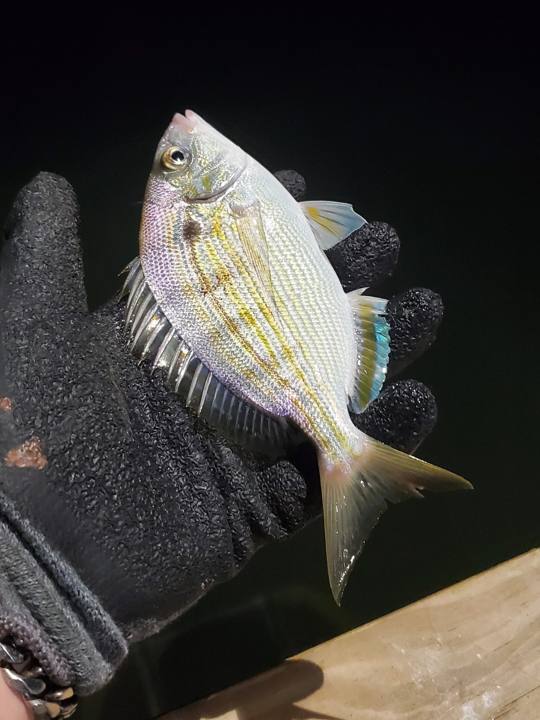
Identification cues: Silvery body crossed with yellow-blue lines, yellow fins, dark shoulder spot behind gill cover, and small mouth with incisor-like teeth. Dorsal spines are sharp.
Inshore vegetation and structure, including pilings and rocky areas. Florida Gulf/coastal habitat; inclusion is not a claim of equal abundance at Matlacha.
Alan Jeon; crop by Lodewicus de Honsvels · Photo source ↗ · CC0 1.0 ↗. Resized only; complete image retained.
Season & legal size: No listed size/season limit; default cap: 2 fish or 100 lb/person/day, whichever is greater. General restrictions apply.
How to measure: N/A: no harvest length threshold in this summary.
Identification cues: Large black blotch at tail base rather than the pinfish shoulder spot; faint vertical bars and a dark gill-opening edge.
Vegetated coastal bottoms; also shallow bays and reef-associated habitat. Florida Gulf/coastal habitat; inclusion is not a claim of equal abundance at Matlacha.
Florida all-tackle record: not listed for this species.
SEFSC Pascagoula Laboratory; Collection of Brandi Noble, NOAA/NMFS/SEFSC · Photo source ↗ · CC BY 2.0 ↗. Resized only; complete image retained.
Season & legal size: No listed size/season limit; default cap: 2 fish or 100 lb/person/day, whichever is greater. General restrictions apply.
How to measure: N/A: no harvest length threshold in this summary.
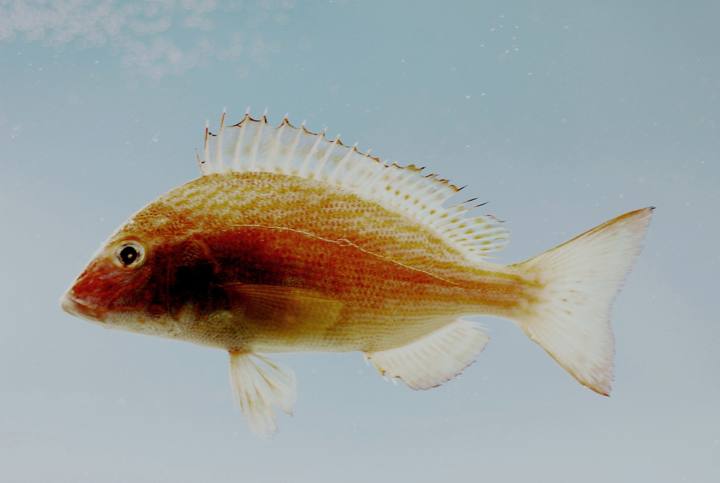
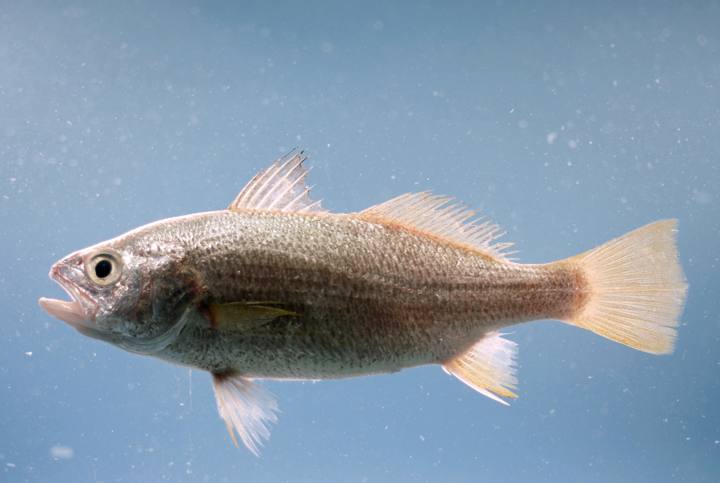
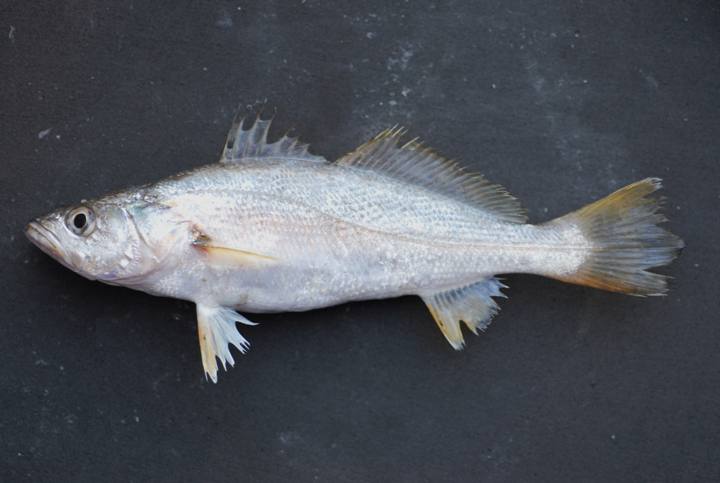
Identification cues: Silver to yellowish sides and dusky/yellow fins; no body spots or large canine teeth. Five or six chin pores distinguish it from sand seatrout.
Coastal shallows, estuaries and seagrass/sandy-muddy bottoms; can enter fresh water. Florida Gulf/coastal habitat; inclusion is not a claim of equal abundance at Matlacha.
Florida all-tackle record: not listed for this species.
Season & legal size: SWFL is outside the Northeast Florida Weakfish Management Zone: no minimum size; 100 lb per person/day. No seasonal closure listed. The weakfish rule expressly includes sand seatrout and hybrids. Allowable gear: hook-and-line or cast net.
How to measure: N/A: no harvest length threshold in this summary.
Identification cues: Unspotted pale body, yellow mouth interior and prominent upper-jaw canine teeth. Silver perch lack those canines; spotted seatrout have dark spots.
Gulf coastal waters over sand; bays and channels. Florida Gulf/coastal habitat; inclusion is not a claim of equal abundance at Matlacha.
Florida all-tackle record: not listed for this species.
Season & legal size: No listed size/season limit; default cap: 2 fish or 100 lb/person/day, whichever is greater. General restrictions apply.
How to measure: N/A: no harvest length threshold in this summary.
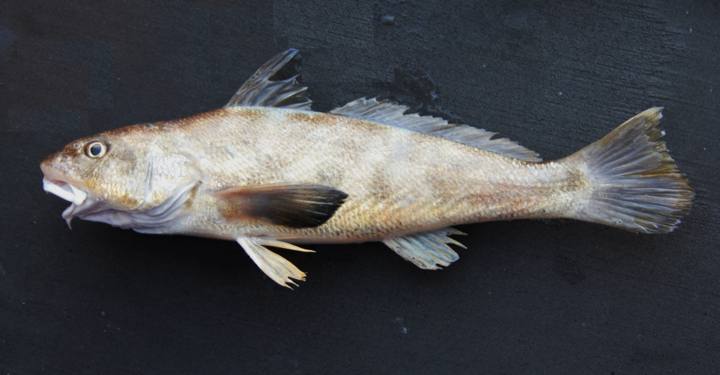
Identification cues: Gray-brown back, faint diagonal blotches and one short chin barbel. Not king mackerel; Gulf kingfish has a dark tail tip and northern kingfish a stronger V-shaped mark.
Surf, sandy-muddy coastal shallows and salty bays/estuaries. Florida Gulf/coastal habitat; inclusion is not a claim of equal abundance at Matlacha.
FWC lists a broader “Whiting (kingfish)” record of 2.80 lb; not verified as a southern kingfish-specific record.
FDA-labelled preserved specimen; muted color differs from a live fish. U.S. Food and Drug Administration · Photo source ↗ · Public domain (FDA) ↗. Resized only; complete image retained.
Season & legal size: No listed size/season limit; default cap: 2 fish or 100 lb/person/day, whichever is greater. General restrictions apply.
How to measure: N/A: no harvest length threshold in this summary.
Identification cues: Slender cylindrical fish with brown bars and blue/orange lines, especially blue lines on the head. Adults can have an extended upper tail lobe.
Shallow bays, seagrass and banks; Gulf and Florida coast. Also occurs around reefs/wrecks offshore. Florida Gulf/coastal habitat; inclusion is not a claim of equal abundance at Matlacha.
Florida all-tackle record: not listed for this species.
Season & legal size: Generally year-round; no recreational minimum size; 50/person/day. Vessel limit 50 September–January, 100 February–August. Seasonal night closures apply in parts of Charlotte County: check exact location before harvest.
How to measure: N/A: no recreational minimum length.
Identification cues: Blunt nose and small mouth; blue-gray back, silver sides with horizontal dark stripes; lacks black pectoral-base blotch.
Coastal schools and tidal creeks; juveniles move into estuaries. Listed in Charlotte Harbor Preserve fauna.
Florida all-tackle record: not listed for this species.
Bag is shared among regulated mullet species; includes bait mullet. Juvenile stripes can be indistinct. Do not claim all Charlotte Harbor open at night.
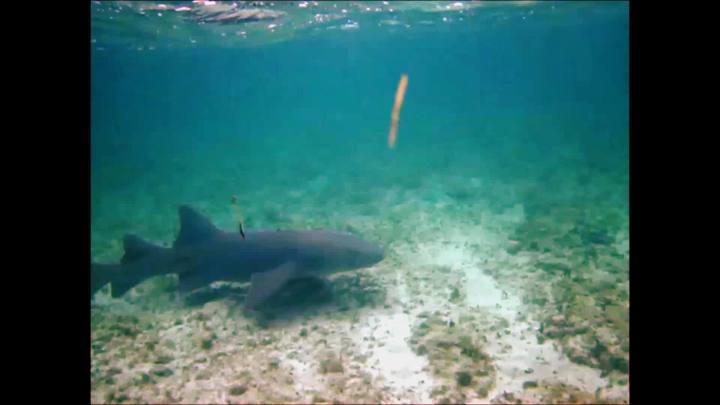
Habitat reference with a small shark and remora; not a close identification plate. James St. John; color adjustment by Togabi · Photo source ↗ · CC BY 2.0 ↗. Resized only; complete image retained.
Season & legal size: Florida state waters: minimum 54 in FL. Shared shark bag 1/person/day, maximum 2/vessel. No seasonal closure specified on FWC species page; check live rules.
How to measure: FL: measure straight from snout/jaw tip to center of tail fork, mouth closed.
Identification cues: Brown/tan bottom shark with barbels beside mouth and rounded dorsal fins; long tail.
Shallow South Florida reefs, sand bottoms, grass flats and mangrove islands; listed in Charlotte Harbor Preserve fauna.
Florida all-tackle record: not listed for this species.
Not legally release-only, but cautious identification/handling card. Shark gear requirements apply; shore-based shark course/permit required where applicable. Keep sharks in water for release; do not handle casually.
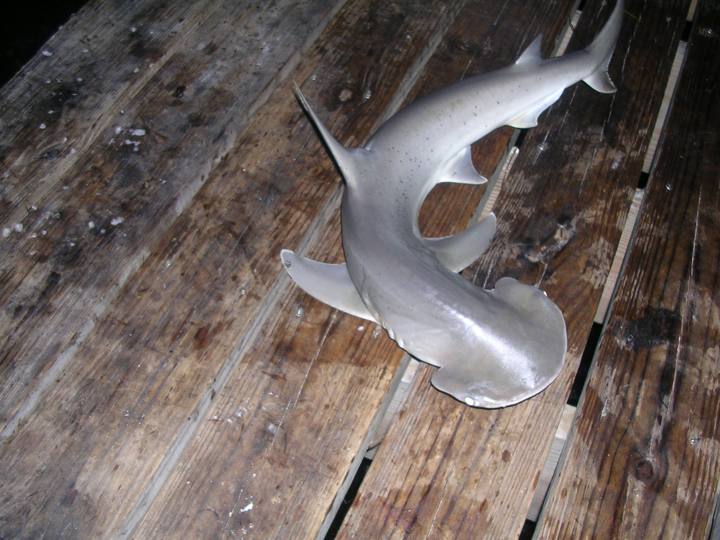
The original photograph truncates the tail tip; use official identification cues as well. MiMi · Photo source ↗ · CC BY 2.0 ↗. Resized only; complete image retained.
Season & legal size: State waters: no minimum size; shared shark bag 1/person/day, maximum 2/vessel. FWC page does not specify a seasonal closure; verify current rules.
How to measure: N/A: no minimum length for this species.
Identification cues: Evenly rounded, shovel-shaped head rather than the wide notched hammer of other hammerheads.
FWC describes abundant nearshore Florida populations over sand/mud flats; occurs in Charlotte Harbor Preserve.
Florida all-tackle record: not listed for this species.
Do not apply bonnethead rules to other hammerheads, which are prohibited. Unknown sharks: release as prohibited. Natural bait shark fishing requires non-stainless, non-offset circle hooks and a cutting device; shore permit/course rules apply.
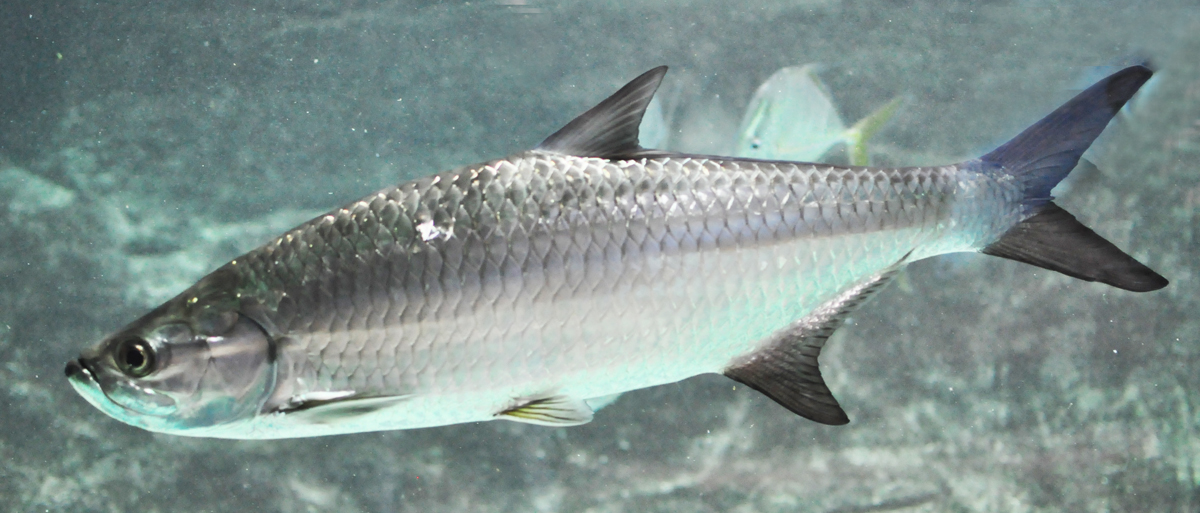
Atlantic tarpon underwater. Citron · Source · CC BY-SA 3.0. No content changes; displayed at reduced size.
Season & legal size: Catch-and-release only; no ordinary harvest slot or minimum keeping size. Only qualifying tagged state/world-record harvest is excepted.
How to measure: Fork length (FL): with the mouth closed, measure straight from the jaw/snout tip to the center of the tail’s fork—not to the longest tail tip or along the body’s curve. The 40 in FL threshold is a handling rule, not a keepable size; larger tarpon must stay in the water except qualifying tagged record harvest.
Coastal bays, passes and estuaries.
Identification cues: Large silver scales; upturned mouth; long filament on last dorsal ray.
Catch-and-release only, except narrowly defined state/world-record tag harvest. Over 40 in FL (fork length) must stay in the water unless qualifying tagged record harvest. Hook-and-line only; no snagging, spearing or multiple hook with natural bait. Boca Grande Pass has additional gear rules.
Season & legal size: Release immediately unless holding the special harvest permit and tag and meeting every program rule. Permit-only season March 1–May 31; 24–36 in TL; 1 fish/permit holder/season. Closed on this check date.
How to measure: Ordinary catch: do not delay release to measure. Permit slot uses TL: straight from closed-mouth head tip to pinched-tail tip.
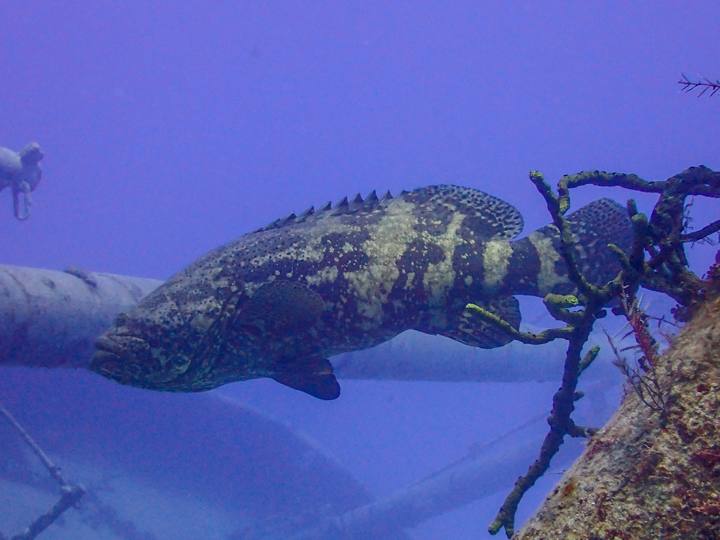
Identification cues: Massive head and mouth, rounded tail, mottled brown/yellow body; young fish show dark vertical bars.
Young fish use SWFL mangroves and estuaries; larger fish favor bridges, wrecks and reefs.
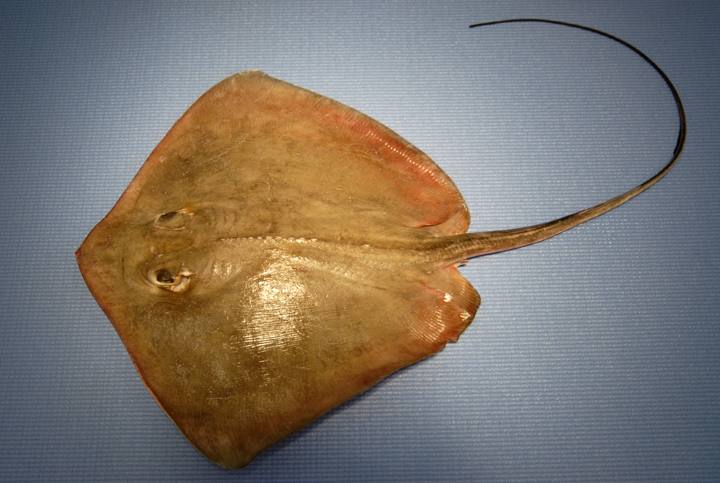
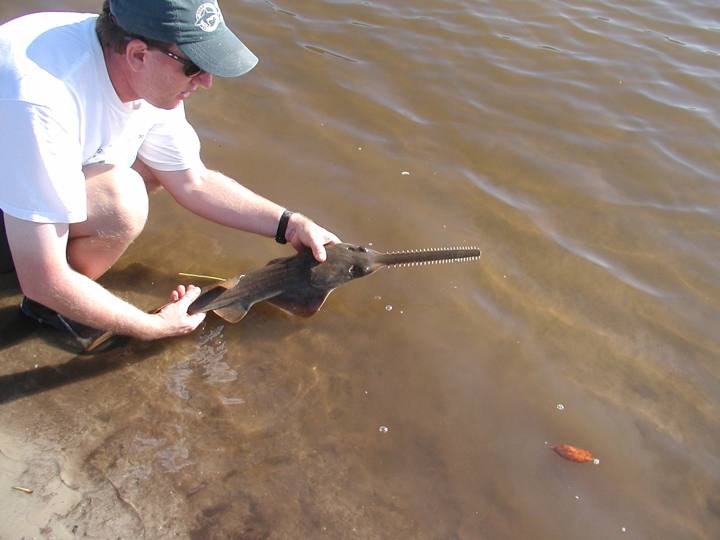
Research/handling reference photograph—not instructions to lift or handle a sawfish. Keep accidental catches in the water and follow FWC release guidance. NOAA · Photo source ↗ · Public domain (NOAA) ↗. Resized only; complete image retained.
Season & legal size: Protected/endangered: do not target, harm or keep. Accidental capture must be released without delay.
How to measure: N/A: no legal harvest size; do not delay release to measure.
Identification cues: Sharklike body but a ray: flattened toothed saw-shaped snout and gills beneath body.
SWFL is a core remaining range; Charlotte Harbor mangrove/estuarine shallows are nursery habitat.
Florida all-tackle record: not listed for this species.
Keep in water. Cut hook or leader as close to hook as safely possible; do not attempt ordinary hook removal or remove the saw. Report sightings to FWC using linked guidance.
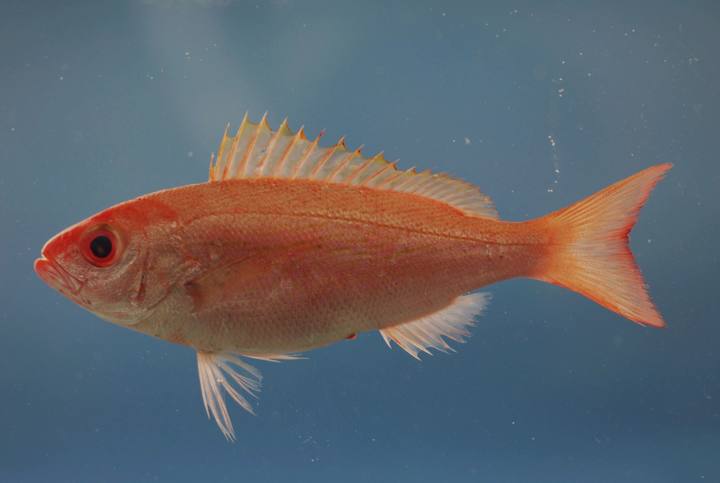
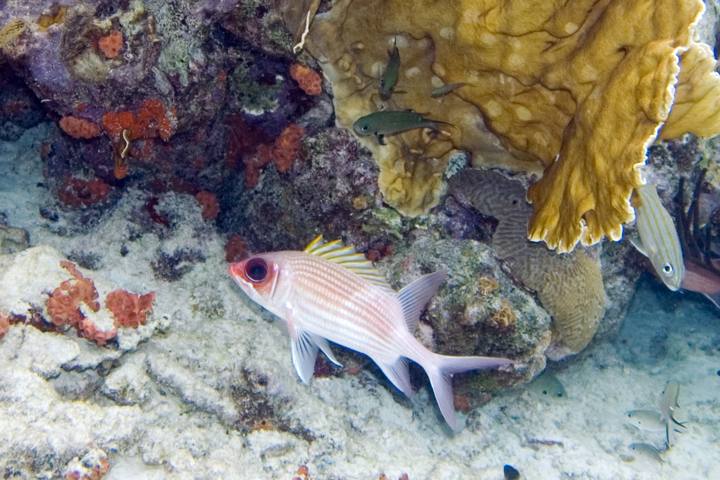
Season & legal size: Identification-only entry: no keep allowance is asserted. FWC prohibits spearing squirrelfish. Release if uncertain and check species-specific current rules before retaining.
How to measure: N/A: this ID-only entry does not establish a legal harvest size.
Identification cues: Red to red-gold body, very large dark eyes, pale belly and conspicuous spiny fins; very different from slender blue-lined sand perch.
Reefs, ledges and crevices; shelters by day and forages at night over adjacent sand or seagrass. Florida Museum gives western Atlantic range including the Gulf. Included as a nickname comparison, NOT described as a common Matlacha inshore catch.
Florida all-tackle record: not listed for this species.
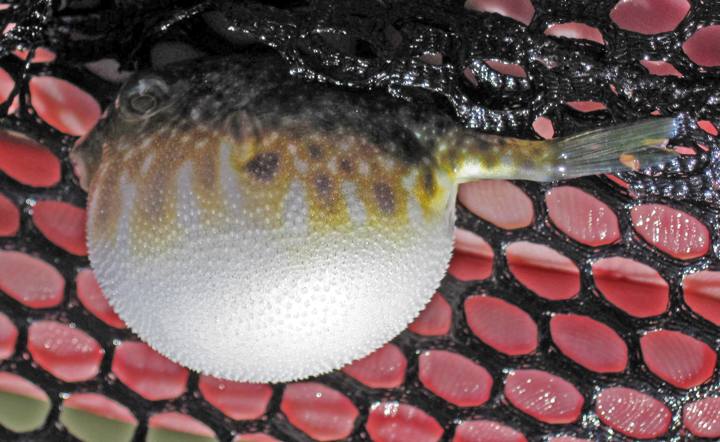
Season & legal size: Identification-only card; release recommended, not a claim of statewide prohibition. No harvest guidance supplied. Sphoeroides harvest is prohibited in Volusia, Brevard, Indian River, St. Lucie and Martin county waters.
How to measure: N/A: identification-only; do not retain based on this guide.
Identification cues: Small rounded fish with beaklike mouth and pale tan rings/blotches; can inflate. Several puffers look alike: pattern alone is not a food-safety test.
Inshore seagrass and Gulf waters; FWC monitoring documented this species in Charlotte Harbor.
Florida all-tackle record: not listed for this species.
Do not eat a puffer based on this card. Potentially fatal toxins are not destroyed by cooking or cleaning. Old identification brochures containing favorable eating advice are superseded by current FWC toxin warning.
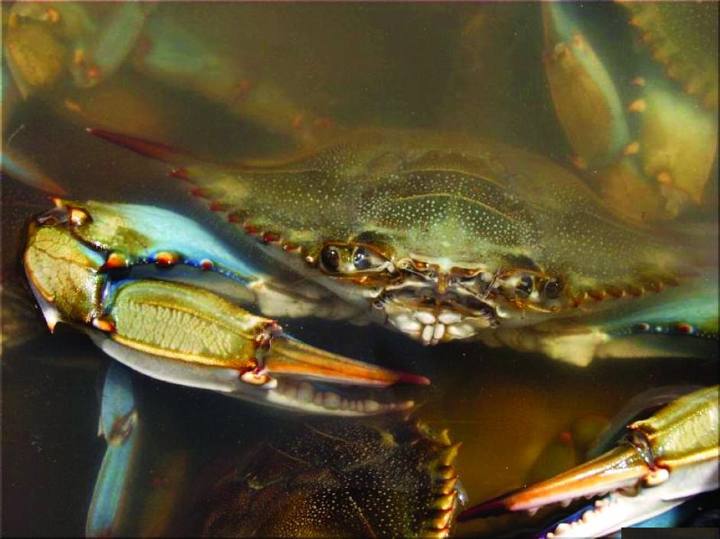
Season & legal size: No minimum size; 10 gallons whole per person/day. Egg-bearing crabs must be released. Seasonal restrictions concern traps: see regional and offshore trap closures.
How to measure: N/A: no minimum size. Bag is measured in gallons of whole crabs, not pounds of picked meat.
Identification cues: Olive-green shell, blue legs and claws, paddle-like rear swimming legs; females often have red claw tips. Soft-shell is the same species immediately after molting, not a separate crab species.
Florida Gulf and Atlantic bays, channels and river mouths; estuarine species.
Harvest areas, gear & license
Charlotte/Lee falls in the Broward–Pasco July 10–19 regional trap closure in odd-numbered years (next ordinary cycle 2027, subject to FWC changes). The 2026 regional retrieval closures are on the Atlantic coast. Gulf traps beyond 3 miles close September 20–October 4; recreational traps are not allowed outside state waters.
Recreational saltwater license unless exempt; trap users 16+ need annual no-cost trap registration even if license-exempt. Maximum 5 blue-crab traps/person; follow FWC trap construction/labeling rules, including rigid entrance no larger than 2 × 6 in. Crab snares are not legal gear.
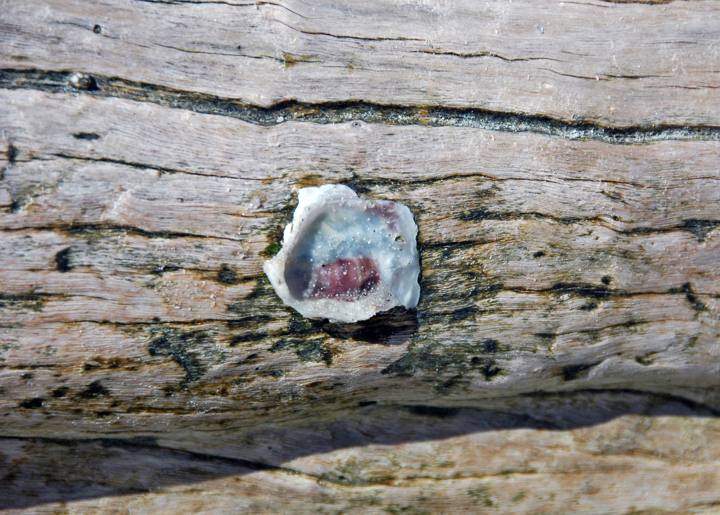
Inner-shell reference view; harvested oysters cannot be judged safe from appearance. James St. John · Photo source ↗ · CC BY 2.0 ↗. Resized only; complete image retained.
Season & legal size: Charlotte/Lee wild oysters: closed July 1–September 30; seasonal window October 1–June 30, only where exact FDACS-classified area is open. Minimum 3 in greatest dimension. Daily maximum 2 bags per person OR vessel, whichever is less; one bag equals 10 gallons or 60 lb.
How to measure: Measure greatest shell dimension, not fish total/fork length. Cull over the harvested bar; see FWC for limited attached/individual undersize tolerances.
Identification cues: Rough gray-white, irregular oval bivalve: one flatter shell and one cupped shell, usually a purple muscle scar inside. Reef-building oysters attach to hard surfaces and each other.
Southwest Florida intertidal and shallow subtidal estuaries, including Charlotte Harbor and Matlacha Pass; occurrence does not mean a site is approved for harvest.
Harvest areas, gear & license
Check the FDACS Southern Gulf daily-status table AND classification boundary map immediately before gathering. Harvest is prohibited year-round in unclassified or other non-approved waters. Temporary rainfall, river-flow and harmful-algal-bloom closures override the seasonal window.
Recreational saltwater license unless exempt. Hand or ordinary tongs only; no dredges or mechanical harvesters over public reefs. Do not harvest private aquaculture stock.
“R months” is tradition, not a safety rule or legal season. Illness from raw oysters can occur in every month; appearance, smell and taste cannot establish safety. Choose properly cooked oysters; approved/open water does not make raw oysters risk-free. Cooking is not a substitute for obeying closures.
CDC: for oysters in shell, discard open shells before cooking; boil until shells open, then 3–5 minutes longer, or steam in an already-steaming vessel for 4–9 minutes. Discard shells that do not fully open. Follow the linked CDC instructions for shucked oysters.
No matches. Try another name or choose All groups.
Use legally purchased or legally harvested bait. Bait collection has its own species, size, season and area rules. Do not scrape or collect from private structures without permission. The fish-fishing tips favor single-hook tackle and do not authorize nets, traps, spears or collecting shellfish. Shellfish entries have their own gear, license and area restrictions.
Catch & release / protected wildlife
Plan release before casting: match tackle to fish, have a dehooker and line cutters ready.
Keep fish in water where possible. If lifting an allowable small fish, wet hands and support it horizontally; do not grip gills or eyes.
Remove a readily accessible hook gently. For deeply swallowed hooks, cut the leader close rather than prolonged digging.
Return fish promptly; never drag fish ashore for photographs. Follow species-specific in-water rules.
Do not target sawfish. If accidentally hooked, keep it in the water, cut the line as close to the hook as safely possible and release promptly; never remove the saw. Report encounters using NOAA’s current guidance. Sharks have separate identification, prohibited-species, gear and shore-permit rules: this beginner guide is not a shark-fishing authorization.
Useful when a lure benefits from freedom at the eye. A split ring or snap may already supply that movement; a loop is not required for every hook or lure.
Quick reminder — wrap counts vary by line and demonstration
Make a loose overhand knot in the leader, leaving a working tag.
Pass the tag through the lure eye and back through the overhand knot.
Wrap around the standing line and return through the overhand opening exactly as demonstrated.
Moisten and seat carefully, retaining a small fixed loop; inspect and pull-test.
A useful basic join, but bulk and diameter mismatch matter. Berkley recommends it for similar diameters, while Tackle Tactics teaches braid-to-leader. Do not treat it as universal for very different sizes; learn Alberto for thin braid to a thicker leader.
Quick reminder — use braid/leader-specific wrap guidance
Overlap the two line ends with enough working length.
Tie one Uni around the other line and its own standing part.
Repeat with the second line, following the demonstration’s wrap guidance for each material.
Moisten, seat each knot, then pull the standing lines to bring them together. Inspect and pull-test before trimming.
Adds a useful different-diameter option rather than another hook knot. Practice at home; the return pass and orderly outward/return wraps are important. Diameter is not the same as pound-test rating.
Quick reminder — watch the return pass closely
Fold the thicker leader into a loop and pass the braid tag through it.
Wrap the braid around both leader strands away from the opening.
Wrap back toward the opening, then pass the braid back through so its tag and standing line leave on the same side.
Moisten, seat gradually and inspect; firmly pull-test before trimming. Follow the full lesson for its wrap count.
A researched shortlist centered on Matlacha, Pine Island (Bokeelia / St. James City), and Cape Coral launches. Captiva and Fort Myers / Sanibel alternatives are separately labeled. Not an exhaustive Southwest Florida directory.
Before you book
Confirm the actual departure ramp and travel time from Sugar Sand.
Confirm current boat, guest capacity, child life-jacket sizes, weather policy and total price.
Ask about fishing-license coverage, required captain credentials and insurance; none independently certified here.
Fishing is weather- and season-dependent; no catch guarantee is implied.
Matlacha-named listing currently gives 3105 Stringfellow Road, St. James City. Official contact also lists Horton Park in Cape Coral; confirm your trip’s actual departure.
Check route: Route distance from Sugar Sand not independently verified; confirm departure point before planning travel.
Activity evidence & notes
Operator booking pathway plus verified April 3, 2026 trip review.
Duplicate Captiva/Sanibel listings not counted separately.
Official website and marketplace describe different boats/capacity; confirm current boat and group limit.